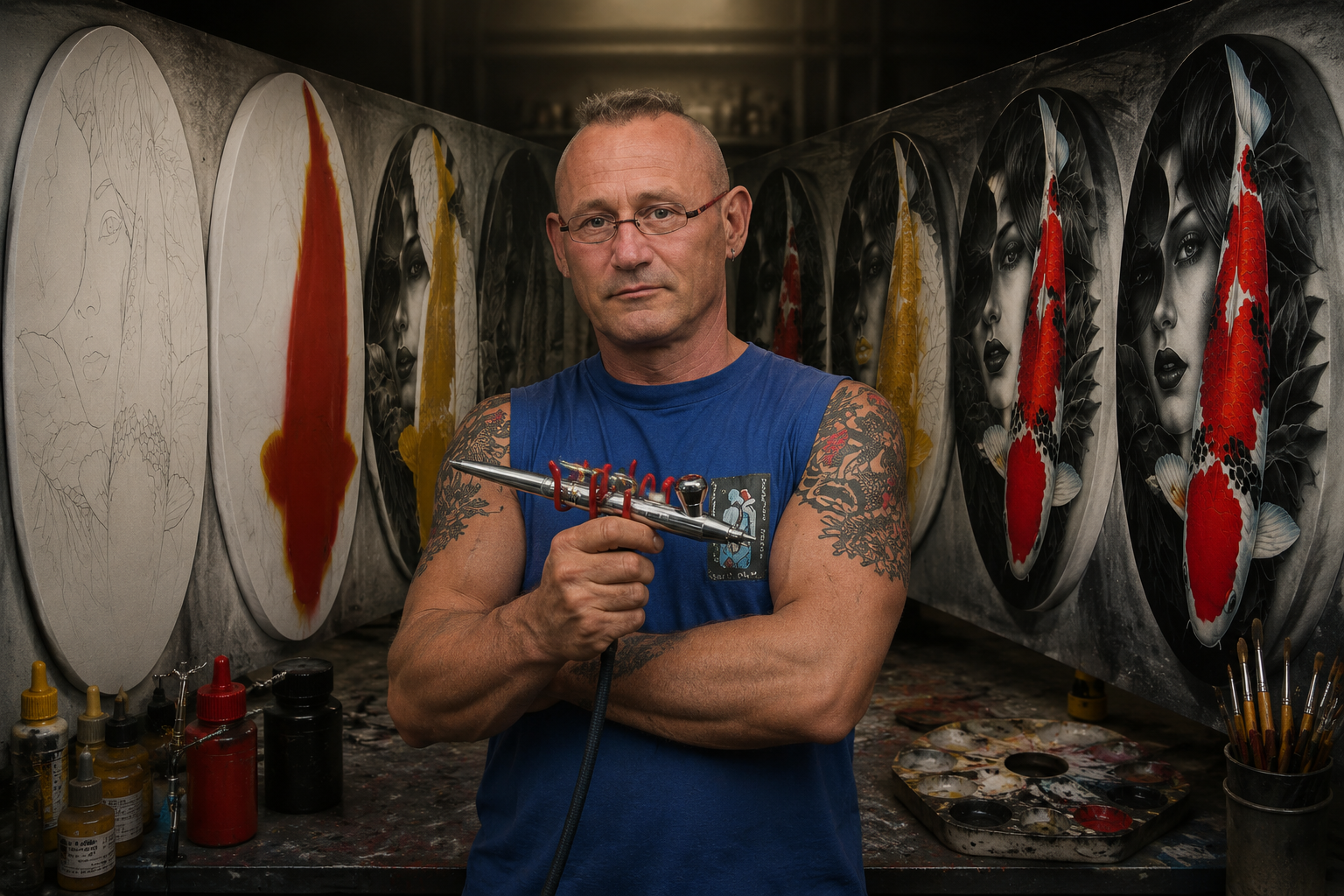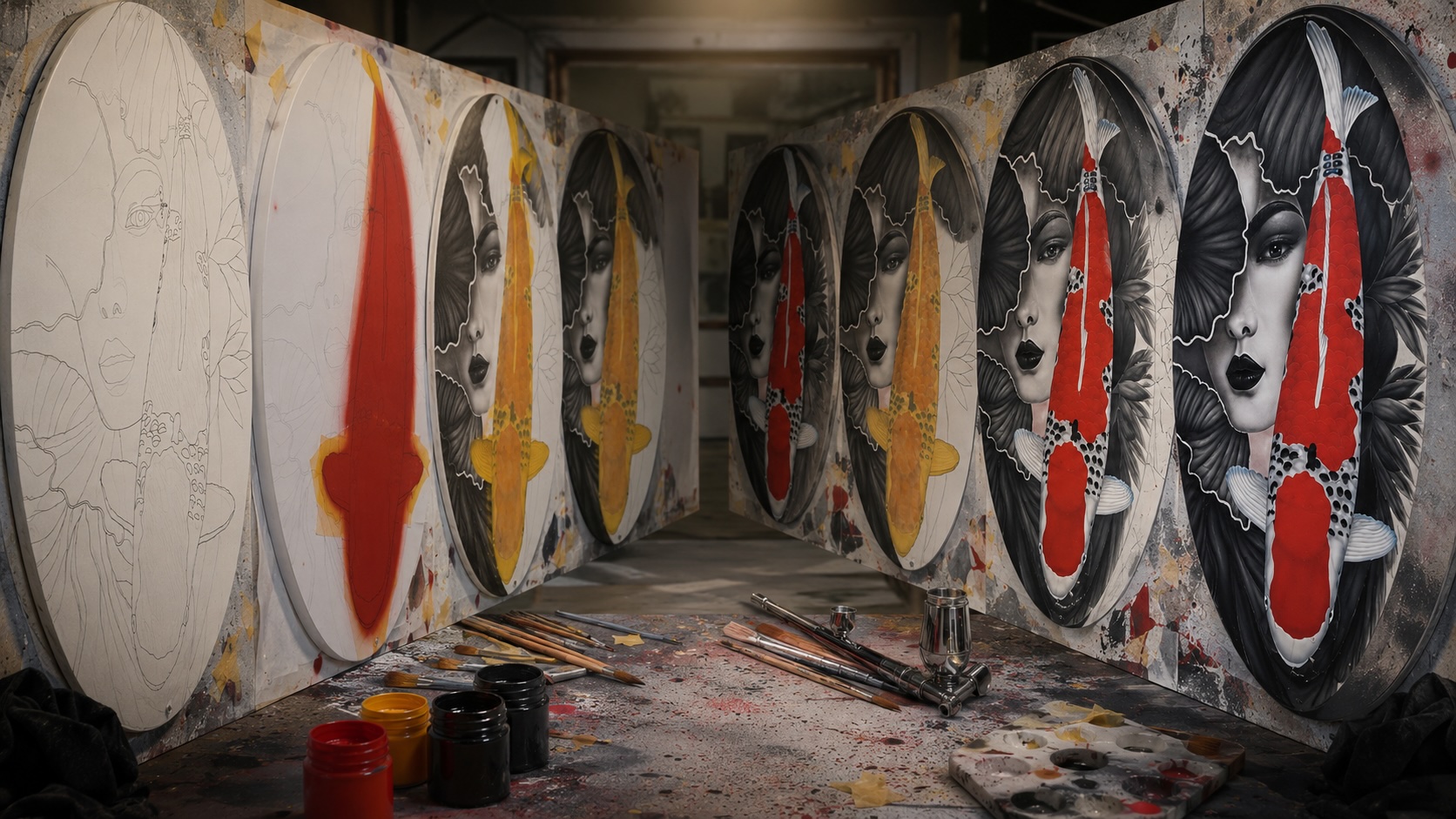
An artist with paint on his fingers and koi in his head
Some stories begin with a champion fish. Others with an artist still unsure in the middle of the night about a fin, an eye, a color cast or a piece of sumi. With Gregor Meyer, it usually begins with both.
Gregor is a paintbrush artist. But those who know his work know that description is actually too small. He doesn’t paint koi as if they were decorative objects. He paints them as if they have a past, an owner, a loss, a victory, a character. And yes, sometimes also as if they have personally challenged him to a duel with paint, light and patience.

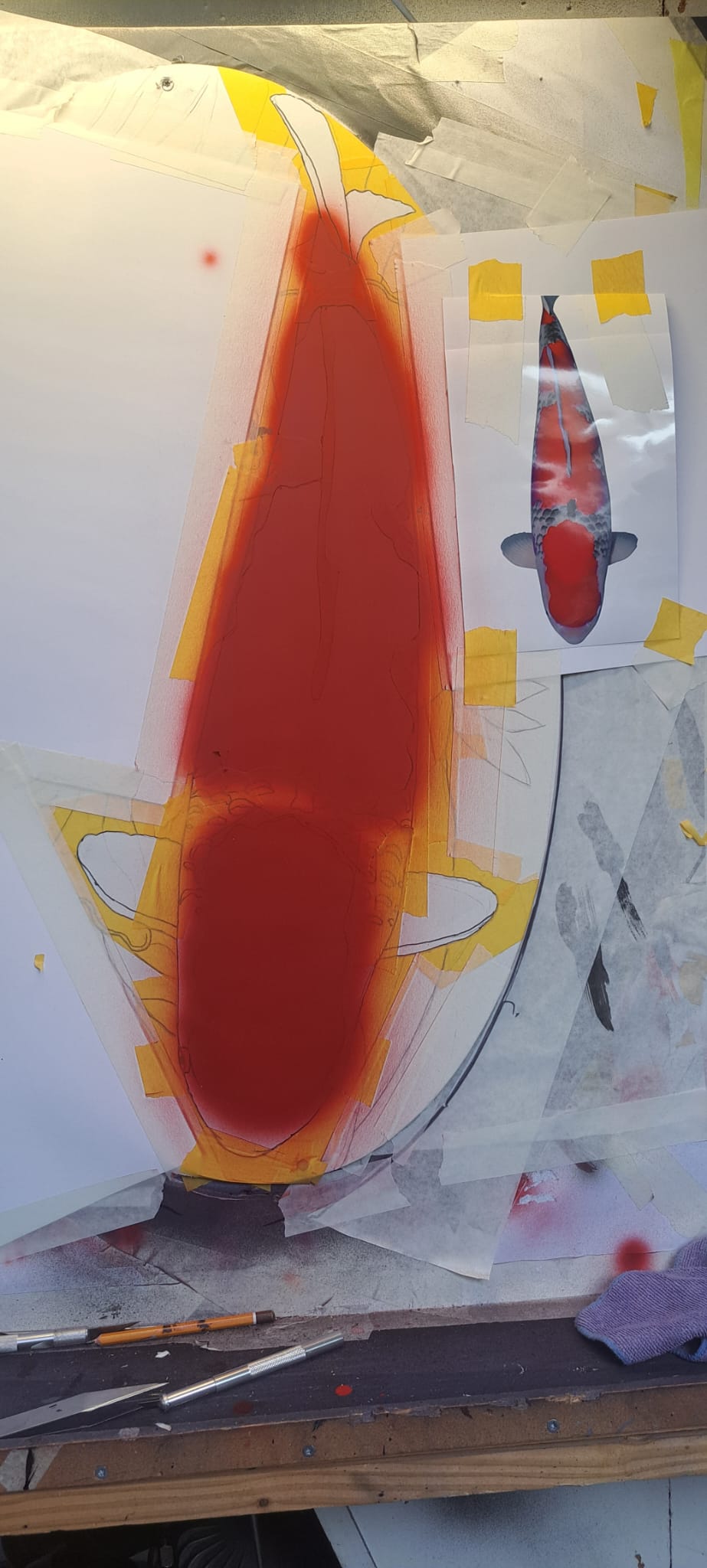
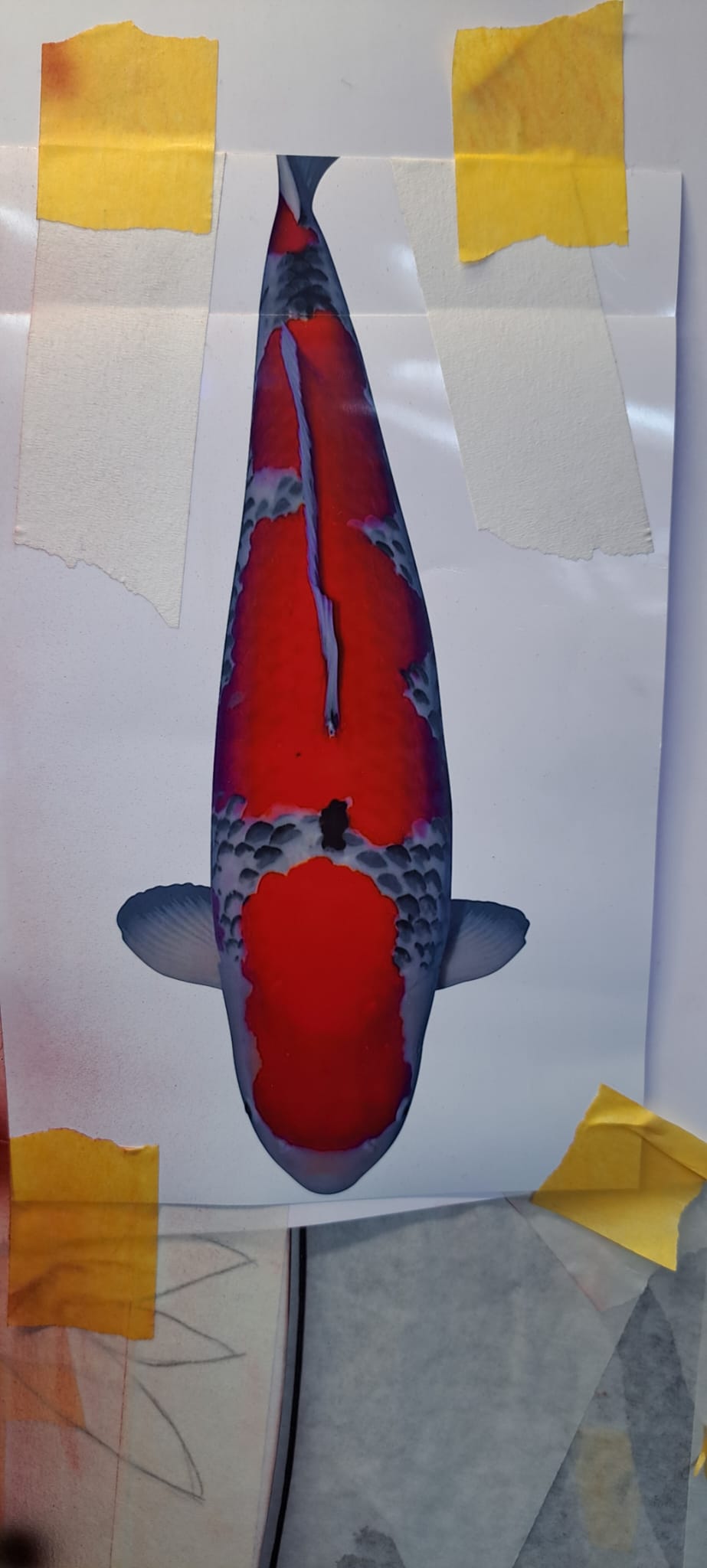
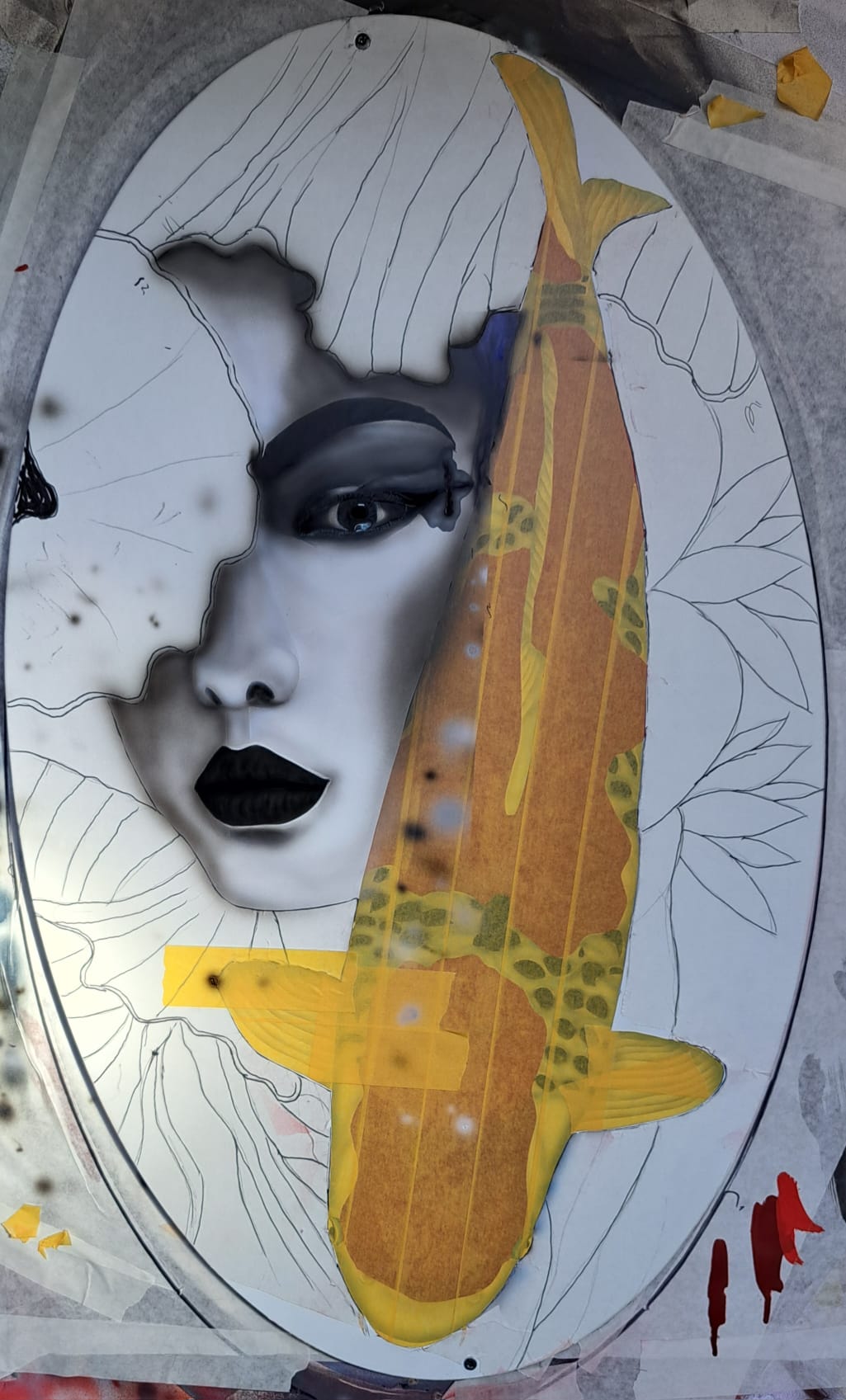
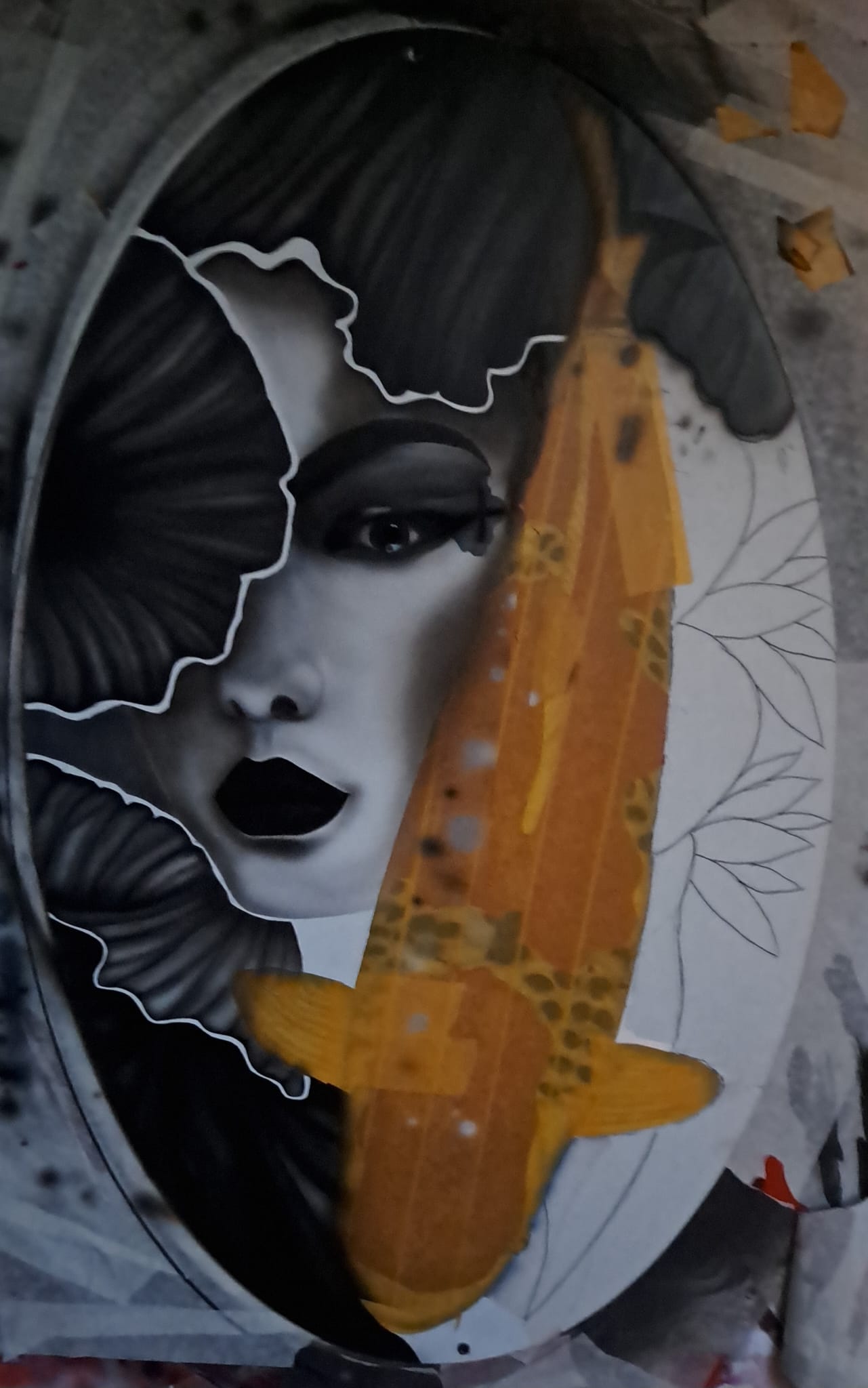
The latter is no exaggeration. In the creation of his recent Goshiki painting, it became clear once again how meticulous Gregor is. He seeks not just a beautiful picture, but a picture that makes sense. A koi must be anatomically convincing, the variety must remain recognizable and the atmosphere must tell something beyond: look, a fish; paintings these days must have substance. Thank goodness for that.
The enquirer behind the paint
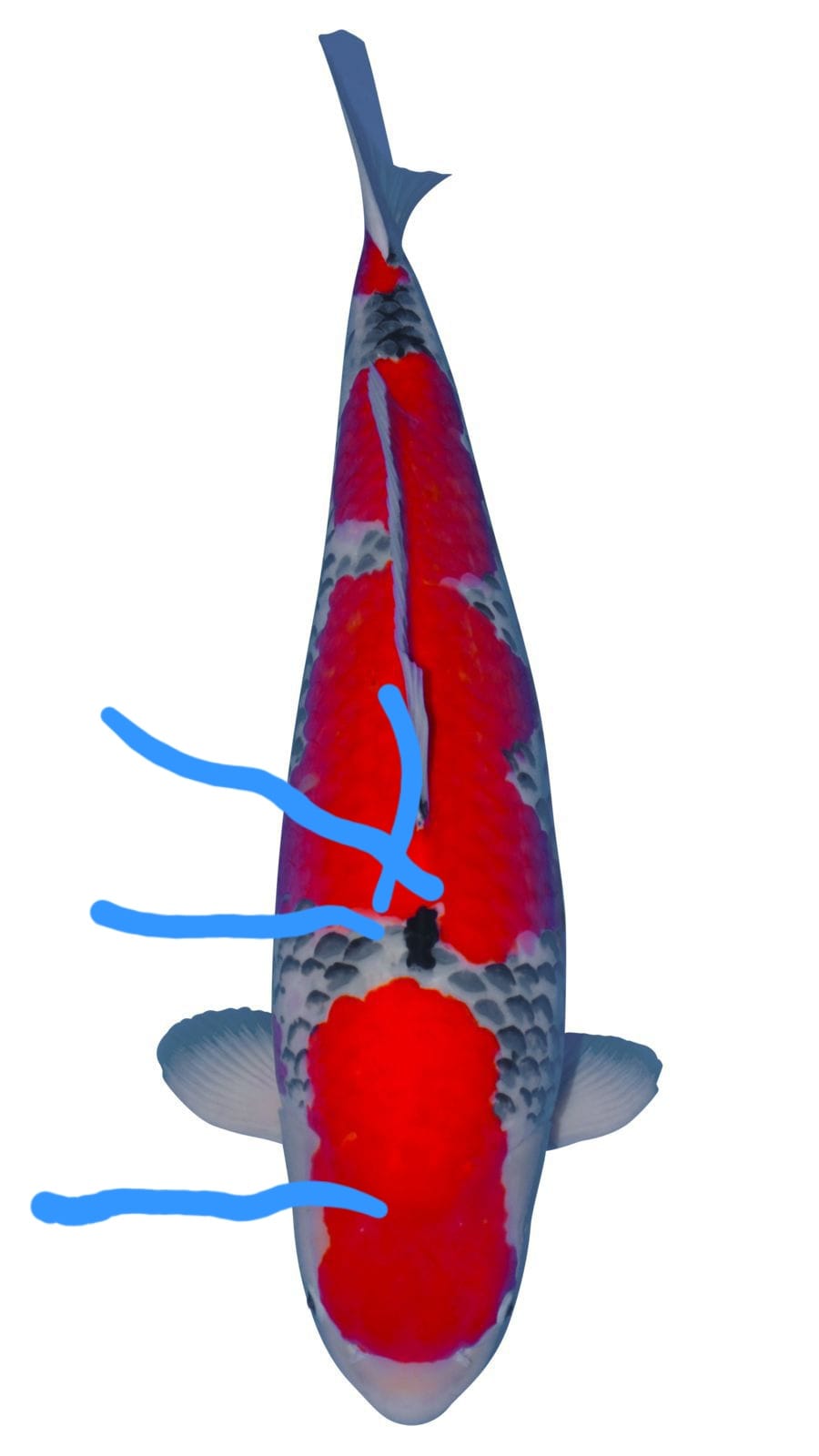
In that process, Gregor regularly uses Tiebo Jacobs of KoiQuestion as a source of questions. Not because Gregor does not have his own artistic eye, but because he takes the truth of Nishikigoi seriously. And anyone who takes koi seriously knows that a detail is never just a detail.
Is that blue in the fin real, or is it due to reflection from the barrel? Should there be black in the red? Is the placement of the eye correct? Is this a Budo Koromo, a Sumi Goromo or yet something else that has again been unnecessarily complicated by the human urge to name?
It is exactly those kinds of questions that Gregor asks. Not out of insecurity, but out of respect. A painting may be art, but a koi remains a koi. And within the koi world, you are punished mercilessly when you think a Sanke, Showa, Goshiki or Utsuri is just “a pretty colored fish.” People like that probably also put mayonnaise on sushi.
The Goshiki as a turning point
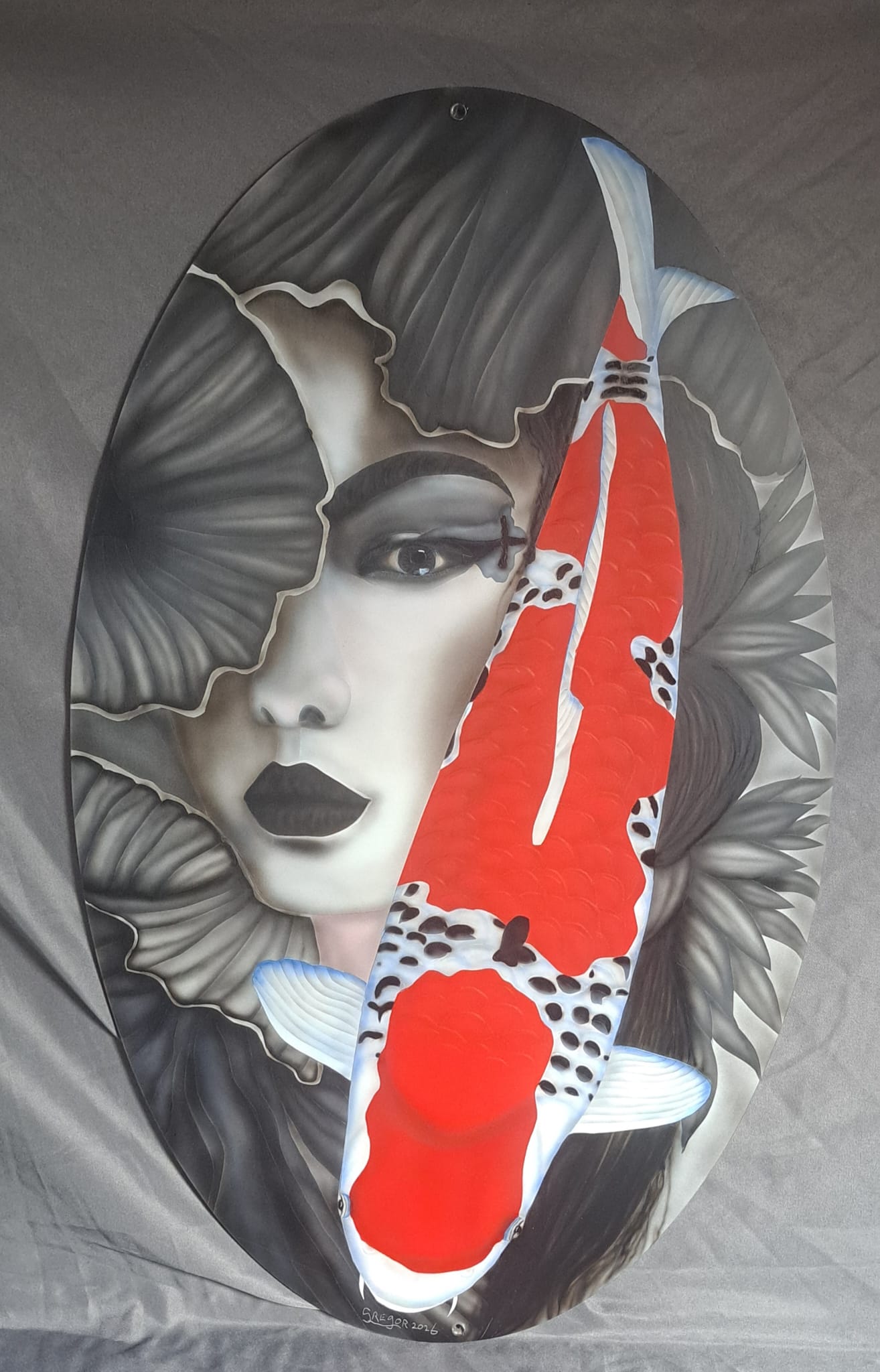
For his latest work, Gregor chose a Goshiki. A variety beloved in the koi world, but by no means an easy customer for an artist. The beauty of a Goshiki lies precisely in the tension between the deep underlying sumi, the red pattern and the often almost mysterious skin structure.
Gregor himself described it very aptly:
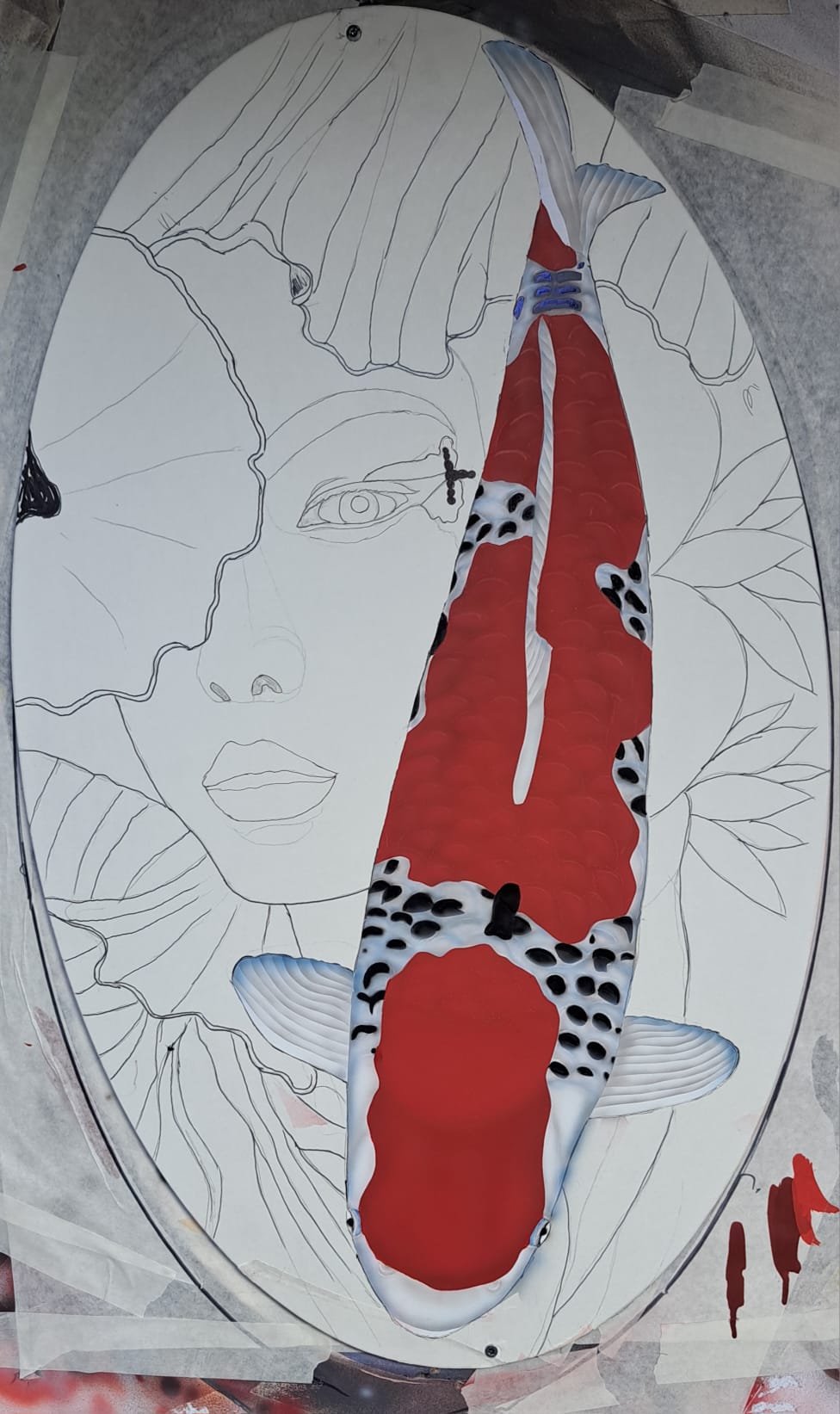
“Goshiki was a challenge. A difficult fish, but reasonably successful. The adventure is in the contrast. By doing 90% black and white, I knew the sumi would dominate. It distracts from the black and white and emphasizes the aforementioned sumi. For me a new angle and a nice inspiration to develop further.”
And exactly there lies the heart of this work. The Goshiki was not simply placed on a background. The entire composition became a play between black, white, gray and red. By reducing almost everything around the koi to monochromatic shades, the sumi suddenly had room to speak. Not screaming, not dominantly invading the room like a hobbyist with a just a little too big bowl, but present. Layered. Exciting.
A geisha, a Goshiki and a lot of guts
The painting shows a female figure, almost geisha-like in appearance, with the face and surroundings kept largely in black and white. Over this, the Goshiki moves as a red and living contrast. The effect is immediate. The koi leaps forward, but at the same time is carried by the mysterious calm of the background.
Precisely because Gregor chose austerity around the fish, it created room for tension. The red patterns of the Goshiki draw the eye to it, while the black and white setting gives the sumi extra weight. That’s not a trick. That’s composition. And composition is where art stops being “pretty picture” and starts being something that sticks.
The challenge was mostly in dosage. Too much black and the work would clog up. Too much color and the whole idea of contrast would evaporate. Too much emphasis on the koi and the background would become backdrop. Too much background and the koi would become extras in its own painting. Humanity has a talent for that too: making exactly the wrong thing important.
From doubt to new inspiration
What makes this work special is not only the end result, but also what it did to Gregor himself. After countless paintings, he honestly admitted that he was feeling a little burned out. Not dramatically, not theatrically, but simply as artists sometimes have when technique, expectation and production begin to eat away at each other.
The Goshiki changed that.
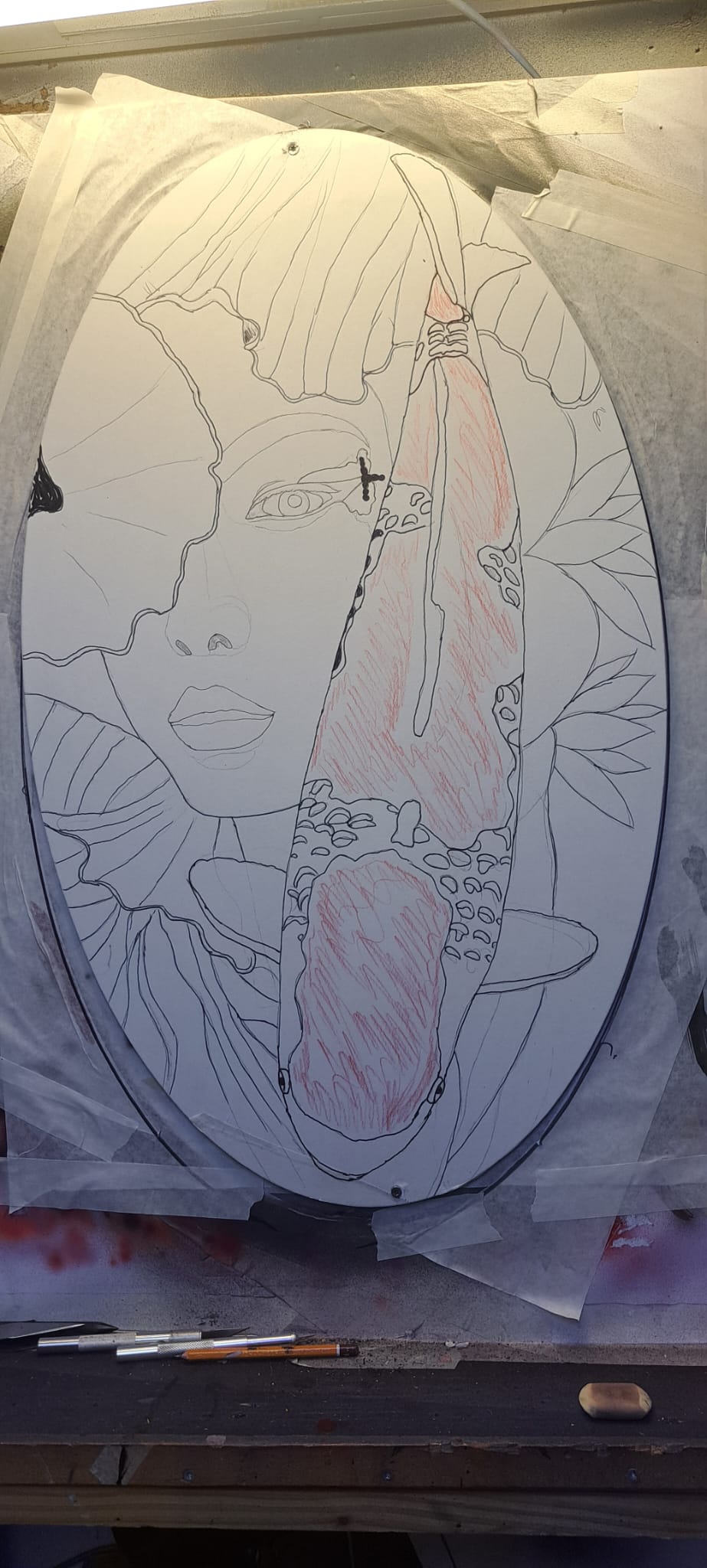
“For me a new angle and a nice inspiration to develop further. It has already led to a new assignment, so I am positively surprised.”
He took that new energy directly into his next work: a Hi Utsuri. An even greater contrast, as Gregor himself pointed out, because a Hi Utsuri consists largely of powerful sumi and warm hi. This allowed him to further experiment with depth and a stronger three-dimensional effect.
“After countless paintings, it’s a new impetus again. I didn’t expect that, because I was a little burned out. Now full of inspiration again.”
That is perhaps the best thing about this story. Not just a painting that succeeds, but a painting that restarts its maker. As if the Goshiki was not only being painted, but also giving something back.
Art with a heartbeat
Those who have been following Gregor for longer know that he is touched by stories behind koi. Especially when loss, memory or emotion are involved. For example, he has previously created work around special koi that were much more to their owner than a prize-winning fish.
One example is thedeceased koi of Patrick Makkes. A story that didn’t let Gregor go. After hearing what had happened, he and his daughter Larissa decided to do something special. Larissa would make a Kohaku in her own style, Gregor a Sanke on panel. Not as a commercial commission, but as a gesture.
That says a lot. In a world where even sadness is sometimes turned into content, Gregor chooses to use paint as a reminder. Silent, tangible and personal.
The loss of KoiQuestion‘s former mascot also touched him. The famous Showa that grew into an icon within the community and eventually lost its life at 93 centimeters in a mudpond of Dainichi. To many people, that was “a fish.” For enthusiasts, it was a story. For Gregor, it was emotion in color.
Father and daughter at Koi Show Noorderlicht
At Koi Show Noorderlicht in Bakkeveen, this story will get a new chapter. Gregor will be there with his work, but this time he is not alone.
His daughter Larissa stands next to him with her own watercolor paintings. And that makes this edition special. She was already there in 2017, back then with stick-on tattoos for visitors. Fun, innocent, a child joining her father’s world. But now she returns as an artist with her own style.
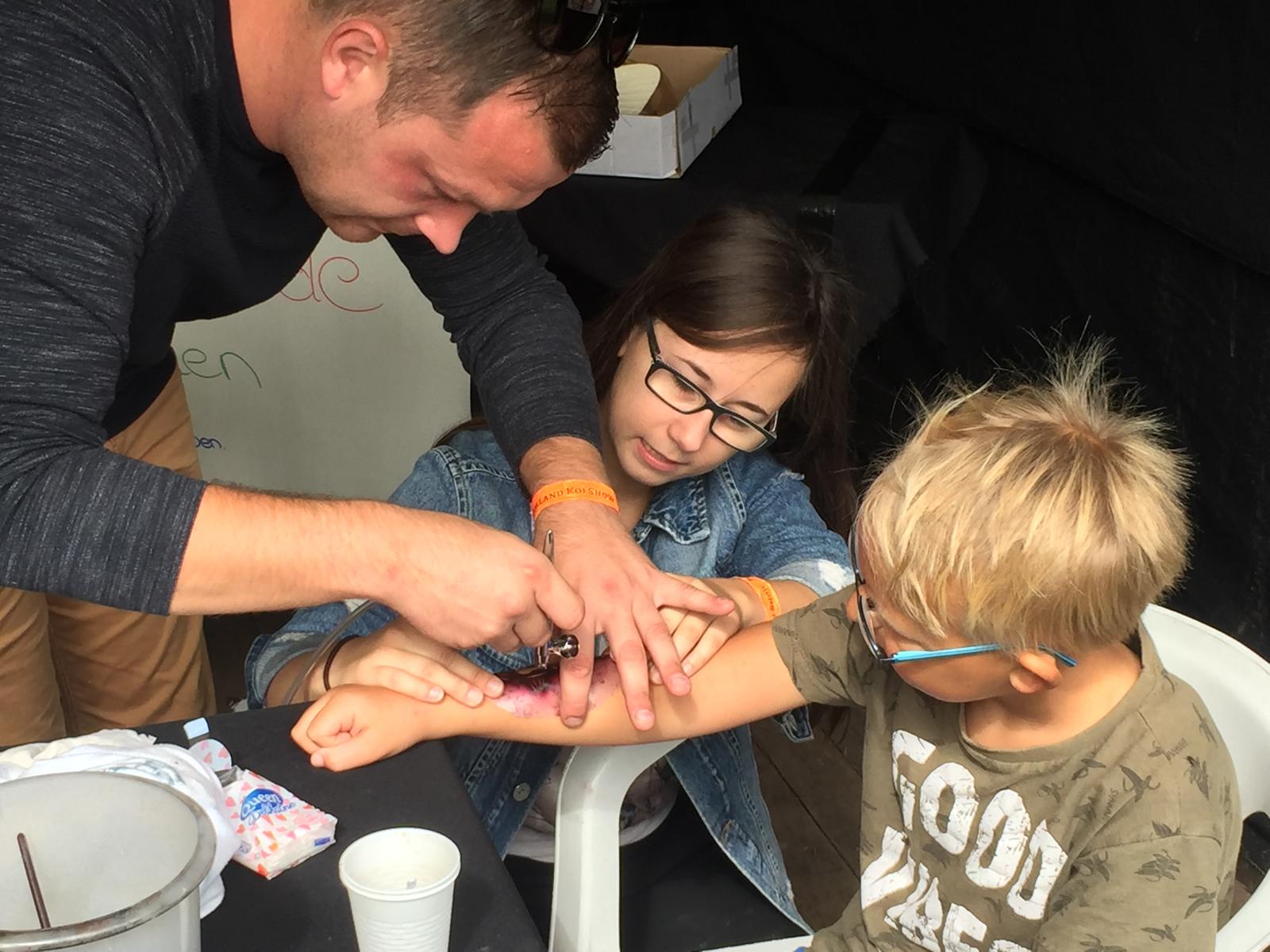
Gregor is visibly proud of that. And rightly so. Because how often at a koi show do you see a father and daughter both displaying their own koi art? Probably not often. Maybe even for the first time. And otherwise we just pretend, because journalism should also dare to breathe a little.
Larissa works with watercolor and gouache, a totally different technique from Gregor’s paintbrush work. Where he seeks depth, contrast and airbrush precision, her work instead creates a softer, more illustrative sensibility. Two generations, two techniques, one subject: Nishikigoi.
Why you should speak to Gregor in Bakkeveen
When you meet Gregor at Koi Show Noorderlicht, you don’t just meet an artist with a booth. You meet someone who struggles with each koi, talks, doubts and goes on and on until the picture is right. Someone who asks Tiebo if a fin isn’t too blue, if the red stays pure enough, if a pattern holds the right tension. Not because he has to, but because he cares.
And this is reflected in his work.
The Goshiki is perhaps a tipping point in this. A painting in which Gregor not only depicted a fish, but also discovered a new artistic route. Less color where it can, more power where it must. More contrast, more tension, more daring.
Visitors to Koi Show Noorderlicht can meet Gregor and Larissa in person next week in Bakkeveen, see their work and hear the story behind the paintings. And believe us: that story is at least as important as the end result.
More than koi on the wall
A painting of a koi is successful only when it does more than appear. It must evoke something. Remembrance. Pride. Loss. Wonder. Maybe even a little jealousy in people who think they can “draw pretty well” themselves. Poor souls.
Gregor Meyer shows with his Goshiki that koi art can still evolve. Not by painting harder, but by looking smarter. By using contrast as story. By seeing sumi not just as color, but as character. By not separating a koi from the emotion it evokes in people.
And perhaps that is exactly why his work fits so well within the koi world. Nishikigoi are never just fish. They are ambition, loss, patience, obsession, beauty and sometimes a financial decision that it’s best not to be too honest about at home.
In Gregor’s hands, they become something permanent.
So be sure to come see him during Koi Show Noorderlicht in Bakkeveen. Check out the Goshiki. See the work of Larissa. Ask questions. Listen to the story. And above all, take a moment.
Because some koi no longer swim in water, but in paint.